

Testing & Procedures
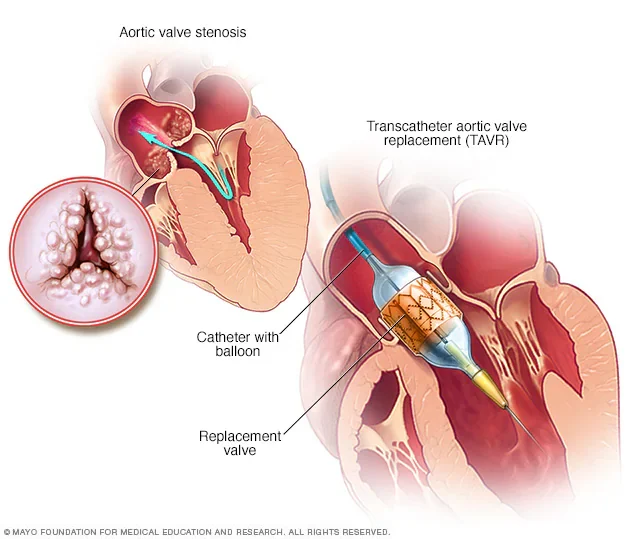
Transcatheter Aortic Valve Replacement (TAVR) is a minimally invasive procedure used to treat severe aortic stenosis, a condition in which the aortic valve becomes narrowed and restricts blood flow from the heart to the rest of the body. When left untreated, severe aortic stenosis can lead to worsening shortness of breath, chest pain, fainting, heart failure, and reduced survival.
Our practice offers TAVR as part of a comprehensive, team-based approach to advanced valve disease.
Patient Evaluation
Patients with severe aortic stenosis who have symptoms may be candidates for TAVR. Today, TAVR is approved for patients across the full spectrum of surgical risk — from high-risk to low-risk — depending on individual anatomy and clinical factors.
Each patient is evaluated by a multidisciplinary heart team, which includes interventional cardiologists, cardiac surgeons, imaging specialists, and anesthesiology. This evaluation typically includes:
The goal is to determine the safest and mosteffective valve replacement strategy for each individual patient.
How TAVR Works
TAVR is performed using a catheter-based approach, most commonly through a small access site in the groin. A replacement valve is delivered through the blood vessels and positioned inside the diseased aortic valve. Once deployed, the new valve begins functioning immediately, restoring normal blood flow.
The procedure does not require opening the chest or stopping the heart. Most patients receive conscious sedation rather than general anesthesia.
Treatment Advantages
Compared with traditional open-heart surgicalvalve replacement, TAVR offers several important advantages:
Clinical studies have shown excellent outcomes with TAVR, including improved quality of life and survival for appropriately selected patients.
Informed Care
After the procedure, patients are monitored closely and typically begin walking the same day or the next morning. Follow-up includes office visits and imaging to ensure the valve is functioning well and symptoms are improving.
Many patients report feeling better within days to weeks after the procedure, with continued improvement over time.
Structural Heart Program
At our practice, TAVR is offered as part of a comprehensive structural heart program focused on careful patient selection, procedural excellence, and long-term follow-up. We believe treatment decisions should be individualized and made collaboratively with patients and their families.
If you have been diagnosed with aortic stenosis or are experiencing symptoms, we are happy to discuss whether TAVR or another treatment option is right for you.
Transcatheter Aortic Valve Replacement (TAVR) is a minimally invasive procedure used to treat severe aortic stenosis, a condition where the aortic valve becomes narrowed and restricts blood flow from the heart to the rest of the body. The procedure uses a catheter-based approach to place a replacement valve inside the diseased valve without opening the chest or stopping the heart.
Patients with severe aortic stenosis who are experiencing symptoms may be candidates for TAVR. Each patient is evaluated individually by a multidisciplinary heart team, which reviews imaging, symptoms, medical history, and overall health to determine the safest treatment approach.
Compared with traditional open-heart surgical valve replacement, TAVR offers a minimally invasive approach, shorter hospital stays, faster recovery, and significant improvement in symptoms such as shortness of breath and fatigue. Clinical studies have also shown improved quality of life and survival for appropriately selected patients.
After TAVR, patients are monitored closely and often begin walking the same day or the following morning. Follow-up care includes office visits and imaging to ensure the valve is functioning properly and symptoms are improving. Many patients report feeling better within days to weeks after the procedure.