

Testing & Procedures
Stress testing and nuclear cardiology help evaluate how the heart performs under physical activity or controlled stress. At Medicor Cardiology, these tests allow our specialists to assess blood flow, detect coronary artery disease, and measure overall cardiac function using advanced EKG monitoring and imaging techniques.
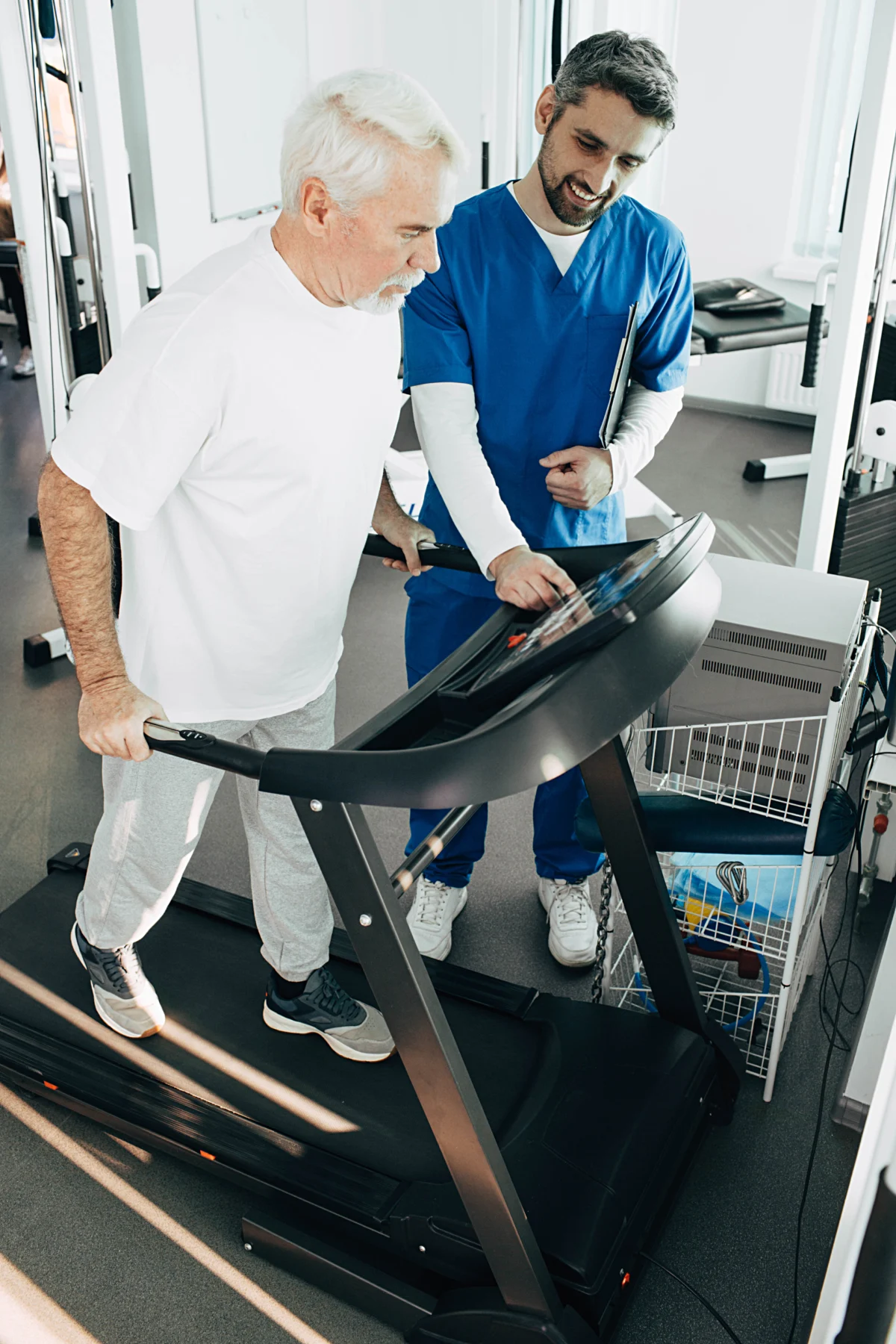
Treadmill Testing
An Exercise EKG evaluates how the heart responds to physical activity. Small electrodes are placed on the chest, arms, and legs to monitor the heart’s electrical activity while you walk on a treadmill.
As the speed and incline increase, circulation, rhythm, and blood pressure are assessed. The test continues until a target heart rate is reached or symptoms develop. This helps determine whether issues such as chest pain, shortness of breath, or rhythm abnormalities may be related to coronary artery disease.
Advanced Imaging
A nuclear stress test uses a myocardial perfusion scan to measure blood flow to the heart muscle at rest and during stress. During the test, a small amount of radioactive tracer (radionuclide) is injected and absorbed by the heart muscle tissue.
Images are captured using a gamma camera to identify areas with reduced blood flow that may indicate blocked or narrowed arteries. For those unable to exercise, pharmacologic intervention is used to safely mimic the effects of exercise.
Highlights
These tests provide valuable insight into how your heart performs under exertion, helping your care team diagnose and treat cardiovascular disease more effectively.
Reveals blockages, rhythm issues, and blood flow abnormalities not always detected at rest.
Exercise or Pharmacologic
Blood Flow • Function • Circulation
Learn how Echocardiography complements stress testing in assessing overall heart performance and structure.
Contact Us
If your physician has recommended stress testing or a nuclear study, Medicor Cardiology’s team will ensure you’re informed, comfortable, and supported throughout the process.
It evaluates how well your heart pumps blood during physical activity, helping detect blockages, rhythm problems, or restricted circulation.
A standard stress test typically takes 30–60 minutes. A nuclear stress test, which includes imaging before and after exercise, can take between 2 and 4 hours to complete.
A standard stress test tracks heart rate and ECG changes during exertion, while a nuclear test adds imaging to visualize blood flow and heart muscle activity.