
Testing & Procedures
Medicor Cardiology provides comprehensive evaluation and treatment for heart rhythm disorders, including arrhythmias that cause the heart to beat too fast, too slow, or irregularly. Our electrophysiology specialists use advanced diagnostic tools and implantable devices to restore healthy rhythm and reduce the risk of complications such as fainting, stroke, or heart failure.
Overview
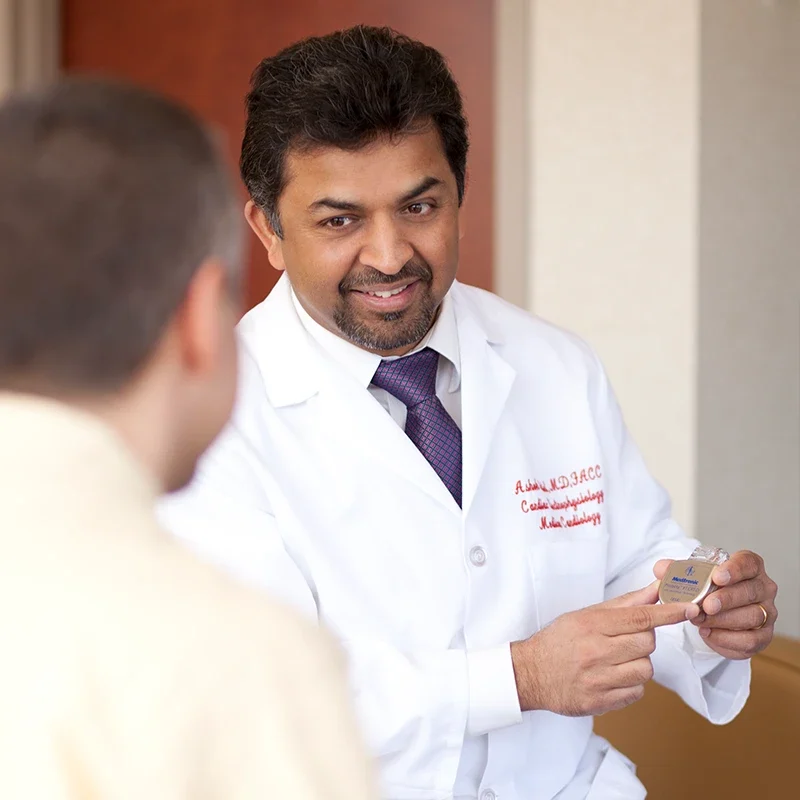
Heart rhythm disorders can occur when the electrical signals that coordinate your heartbeat are disrupted. Our electrophysiologists diagnose and manage these conditions through both in-office evaluations and device-based therapies.
Treatment may include monitoring, lifestyle guidance, and when necessary, the implantation of specialized devices such as pacemakers or defibrillators. Each approach is tailored to your unique condition and cardiac history.
Treatment Options
Our team provides advanced device therapy for patients experiencing rhythm disturbances:
A pacemaker helps regulate slow or irregular heart rhythms by sending electrical impulses to prompt the heart to beat normally. The small generator and leads are implanted under the skin and programmed for your specific condition.
For patients with advanced heart failure, a biventricular pacemaker helps both lower heart chambers beat in sync, improving the heart’s efficiency and blood flow.
An ICD continuously monitors the heart and delivers a brief electrical shock if a dangerously fast rhythm occurs, helping to prevent cardiac arrest.
Advanced Treatment Options
As board-certified cardiac electrophysiologists, we specialize in state-of-the-art procedures to treat heart rhythm disorders safely and effectively. Our focus is delivering cutting-edge technology with a patient-centered approach to improve quality of life and reduce long-term risk.
Patients with atrial fibrillation (AFib) are at increased risk for stroke due to clot formation in a small pouch of the heart called the left atrial appendage.
The WATCHMAN device is a minimally invasive, catheter-based implant designed to permanently close off this appendage and reduce stroke risk without the need for long-term blood thinners.
Who May Benefit?
Patients with non-valvular atrial fibrillation
Those at increased risk for stroke
Individuals who cannot tolerate long-term anticoagulation
Patients with bleeding complications on blood thinners
Benefits
Reduces stroke risk
May eliminate need for lifelong anticoagulation
Minimally invasive procedure
Short hospital stay
The procedure is performed through a vein in the leg and typically requires an overnight stay. Most patients return to normal activity within a few days.
Catheter ablation is a minimally invasive procedure that treats abnormal electrical pathways in the heart. Using advanced 3D mapping systems and precision energy delivery, abnormal tissue responsible for arrhythmias is targeted and eliminated.
Atrial fibrillation is the most common sustained arrhythmia and increases the risk of stroke, heart failure, and reduced quality of life.
Ablation aims to isolate the pulmonary veins and eliminate triggers that initiate AFib.
Technologies Used:
Radiofrequency ablation
Cryoablation
Pulsed Field Ablation (PFA)
Advanced 3D electroanatomic mapping
Benefits:
Improved rhythm control
Reduced AFib burden
Improved symptoms and exercise tolerance
Potential reduction in hospitalizations
Early rhythm control strategies have been shown to improve long-term outcomes in selected patients.
SVT is a rapid heart rhythm originating from the upper chambers of the heart. It can cause palpitations, dizziness, shortness of breath, and anxiety.
Ablation offers a highly effective and often curative treatment.
Advantages:
Success rates often >95% depending on SVT type
Outpatient procedure in most cases
Avoidance of lifelong medications
Rapid recovery
Common SVT types treated include AVNRT, AVRT, and atrial tachycardia.
Ventricular tachycardia is a potentially life-threatening arrhythmia originating from the lower chambers of the heart.
VT ablation is used in patients with:
Structural heart disease
Prior heart attack
Cardiomyopathy
Recurrent ICD shocks
Using detailed substrate mapping and advanced imaging integration, abnormal scar-related circuits are identified and safely treated.
Goals of VT Ablation:
Reduce ICD shocks
Improve survival in selected patients
Decrease hospitalizations
Improve quality of life
Highlights
Our arrhythmia services combine diagnostic precision and long-term rhythm management to keep your heart performing safely and reliably.
Our electrophysiology specialists provide ongoing monitoring and device management tailored to each patient’s needs.
Pacemakers & Defibrillators
Many implanted devices can be checked remotely, ensuring constant oversight of heart rhythm and device performance.
Learn how echocardiography helps assess heart structure and function in patients with rhythm disorders.
Contact Us
Whether you’ve been diagnosed with an arrhythmia or are experiencing symptoms such as dizziness, palpitations, or irregular heartbeats, our cardiology specialists are here to help. We’ll ensure you receive precise testing, expert treatment, and follow-up care you can trust.
Arrhythmias can result from structural heart changes, electrolyte imbalances, medication effects, or other underlying cardiac conditions.
A pacemaker corrects slow heart rhythms, while an ICD can also detect and treat dangerously fast rhythms with a corrective electrical shock.
Most devices last between 7 and 10 years, depending on usage and individual settings. Your cardiologist will monitor device function at each visit.
Yes. Most patients return to normal daily activities after recovery. Your doctor will provide specific guidance based on your procedure and lifestyle.